

Let's answer the two questions you actually came here with, right up front, no wandering: a good natural deodorant works by absorbing moisture and neutralizing odor-causing bacteria with ingredients like baking soda, zinc ricinoleate, and clays — not by blocking your pores with aluminum — and a good natural conditioner works by coating and smoothing the hair shaft with plant oils and butters instead of synthetic silicones. Both categories get a bad rap from people who tried one bad version years ago. We're here to make the case that the current generation, done right, holds its own against anything in the "conventional" aisle.
This one's a bit of a two-for-one, because honestly, deodorant and conditioner get lumped into the same "natural personal care" conversation constantly — same skeptical questions, same "does it actually work" energy, same person standing in front of a shelf trying to figure out which bottle is doing something and which one is just marketing. So let's take them one at a time, give each the real answer, and get you out of here with an actual plan instead of more question marks.

Does natural deodorant actually work?
Yes — but "natural deodorant" and "natural antiperspirant" are not the same promise, and mixing them up is where most of the disappointment starts.
An antiperspirant, natural or not, works by temporarily plugging sweat ducts, usually with an aluminum compound, so less sweat reaches the surface. A deodorant doesn't try to stop sweat at all. It works on odor — absorbing moisture so bacteria have less of the damp environment they thrive in, and neutralizing the smell those bacteria produce as they break sweat down. You will still sweat with a natural deodorant. That's the body doing something it's supposed to do. What changes is what happens to that sweat once it's there.
Our All-Day Natural Deodorant Stick in Fresh Woody and the Citrus Spice version are both built around this exact mechanism — zinc ricinoleate for odor neutralizing, neem oil, kaolin and bentonite clays for moisture absorption, and a light hand with baking soda so it works without going full baking-soda-burn on sensitive underarms. Aluminum-free, plastic-free stick format, and formulated to actually hold up through a full day, not just the walk from your bathroom to your car.
Why some natural deodorants seem to "stop working"
Two honest reasons, both fixable. First, adjustment period — your underarm microbiome shifts a bit when you switch away from an antiperspirant that's been suppressing sweat for years, and it can take one to three weeks to settle. Second, application matters more with natural formulas: a thin, even layer that's actually dry before you dress works far better than one thick swipe. Give it the adjustment window before writing it off.
What actually makes a natural conditioner work
Here's the direct answer: a natural conditioner works by using plant-derived oils, butters, and emulsifiers — things like argan oil, cacao butter, and behentrimonium methosulfate — to coat the hair shaft, smooth the cuticle, and cut static and tangling, the same physical job conventional conditioner does, just built from different raw materials.
The confusion around "does natural conditioner actually condition" usually comes from an early wave of homemade conditioner recipes — vinegar rinses, plain coconut oil, that sort of thing — that do something, but not the full job a formulated bar or bottle does. A rinse can add shine. It can't replace an emulsifier that's actually built to bind oil and water together and cling to hair through a shower.

Argan oil's actual role
Argan oil shows up across our whole conditioner line — Normal to All Hair Types, Dry & Damaged, Oily & Scalp-Sensitive, and Thinning & Weak Hair — and it's earned that spot honestly. It's a lightweight oil known for a silky, glass-like feel on strands without weighing hair down, which is exactly why it's such a common note in "argan oil shampoo and conditioner" pairings you see recommended everywhere. It's not a gimmick ingredient. It's just genuinely good at the one job conditioner exists to do.
Matching conditioner to what your hair is actually doing
- Dry, frizzy, or damaged hair wants richer butters and argan oil in higher concentration — see the Dry & Damaged Conditioner Bar.
- Oily or sensitive scalps do better with a lighter formula that conditions strands without adding heaviness at the root — the Oily & Scalp-Sensitive Conditioner Bar is built for exactly this.
- Thinning or fine hair benefits from a formula that conditions without collapsing volume — the Thinning & Weak Hair Conditioner Bar keeps things light while still smoothing.
If you're building a full sulfate-free shampoo and conditioner routine rather than swapping one piece at a time, we go deeper on pairing them by hair type in Sulfate-Free Shampoo and Conditioner: What Actually Works for Dry, Oily, or Thinning Hair.
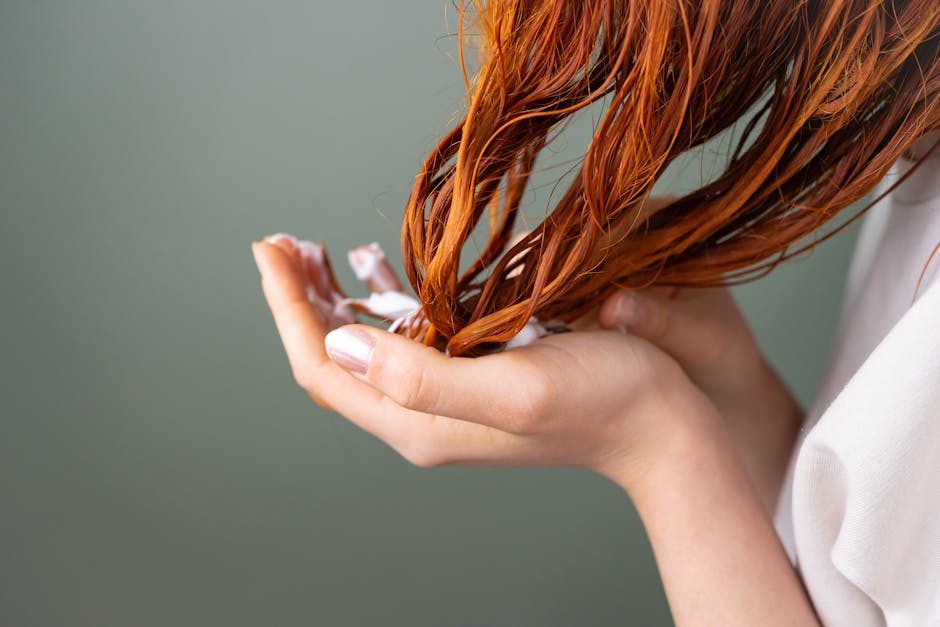
Does conditioner cause hair loss?
Conditioner itself, natural or conventional, isn't linked to hair loss. What can look like hair loss is usually shedding from breakage — over-conditioned hair getting weighed down and snapping, or under-conditioned hair getting brittle and snapping from the opposite direction. The fix in both directions is the same: match the formula to your actual hair type instead of grabbing whatever's on sale, and don't skip conditioner on fine or thinning hair out of fear it'll weigh things down — a properly light formula won't.
Building the sulfate-free, pH-balanced routine that actually holds up
If you're moving toward a fuller natural routine — shampoo, conditioner, deodorant, the whole shelf — a couple of things are worth knowing before you start swapping products one at a time.
A real shampoo bar should be pH-balanced for hair using coconut-based surfactants, not just a bar of soap in disguise. Soap's naturally high pH is fine for skin and rough on hair, so if a "shampoo bar" is leaving your hair straw-like, check whether it was actually formulated as shampoo or just poured into a bar mold. If you want the full walkthrough on what separates the two, and why DIY versions usually fall short of a properly formulated bar, we cover it start to finish in How to Make Natural Shampoo (And Why a Bar Might Save You the Trouble).
Whichever way you go, cure and formulation time both matter more than most labels let on. A bar rushed to shelf soft and undercured won't last, and a conditioner without a real emulsifying system won't do more than a light rinse would.
FAQ
Is natural deodorant as effective as antiperspirant?
It does a different job rather than a lesser one. Antiperspirant reduces how much you sweat; deodorant manages odor while letting your body sweat normally. For most people, a well-formulated natural deodorant handles day-to-day odor control just fine — it just won't stop wetness the way an antiperspirant will.
Why does my natural deodorant stop working by afternoon?
Usually it's application thickness, activity level, or being early in the adjustment period after switching from an antiperspirant. A thin, fully-dry layer applied right after showering tends to outperform a thick swipe applied in a rush.
Can I use natural conditioner on color-treated hair?
Yes — a gentle, sulfate-free routine is generally kinder to color than harsh detergent-based systems, since sulfates can strip color faster. Pick the conditioner matched to your hair's condition (dry, oily, thinning) rather than one specifically labeled for color, since the underlying need is usually about moisture balance, not color specifically.
What's the difference between conditioner and a deep-conditioning mask?
Regular conditioner is a lighter, everyday pass meant to smooth and detangle after every wash. A mask is a heavier, less frequent treatment meant to sit longer and address more significant dryness or damage. Our conditioner bars are formulated for regular everyday use rather than an occasional deep treatment.
Do I need both a shampoo bar and a conditioner bar, or can I skip one?
Most hair benefits from both, since they do different jobs — shampoo cleanses, conditioner smooths and protects. If you have very fine or very oily hair, you might only need conditioner at the ends rather than the roots, but skipping it entirely usually leads to more static and tangling over time.
Does aluminum-free deodorant mean it's also an antiperspirant?
No. Aluminum-free products are deodorants, not antiperspirants, since aluminum compounds are what create the antiperspirant effect. If sweat reduction specifically is your goal rather than odor control, that's a different product category entirely.
How long does a conditioner bar or deodorant stick actually last?
A conditioner bar is concentrated compared to bottled conditioner, since there's no water filler, so it tends to outlast an equivalent-sized bottle by a good margin with regular use. Deodorant sticks vary with application habits, but a thin daily layer is what gets you the most days out of one.
One last practical note
If you're not sure where to start, the Trial Bundle pairs a deodorant stick with a shampoo and conditioner set sized for a few months, which is a low-stakes way to actually test both categories on your own skin and hair before committing to a full routine. Natural personal care rewards a little patience early on — give it the adjustment window, match the formula to what your body's actually doing, and it holds up just fine against anything else on the shelf.
0 comments