

Green lifestyles aren't a finish line you cross — they're a stack of small, repeatable choices that add up to less waste, less guilt, and honestly, a lot more freedom. If you're picturing a spotless zero-waste pantry and a compost you actually enjoy tending, relax. Living sustainably just means building daily habits — what you buy, what you toss, what you drive, what you eat — that put less pressure on the systems keeping this planet running. That's it. That's the whole definition.
We think about this constantly, because we make personal care products for people who'd rather be outside than reading ingredient labels for twenty minutes. So let's cut through the noise and talk about what actually moves the needle, and — just as important — what doesn't matter nearly as much as the internet wants you to think.

What does "green lifestyle" actually mean?
A green lifestyle is a pattern of everyday decisions — not one dramatic overhaul — aimed at reducing your personal footprint on the environment. That covers what you buy, how you travel, what you eat, how you deal with waste, and who you support with your dollars. Eco friendliness meaning, boiled down: does this choice leave less mess behind than the alternative? If yes, that's a green choice. Nobody's asking for perfect. They're asking for better.
The phrase gets tossed around a lot alongside "environmentally conscious," "sustainable living," and "environmentally responsible" — and honestly, they're all pointing at the same target. Small, repeatable, sustainable choices beat one big performative gesture every time.
Why sustainability actually matters (without the doom)
Here's a question worth sitting with for a second: why is sustainability important, really — beyond the headline stats everyone's numb to by now?
Because it's personal. A sustainable environment isn't an abstract global project happening somewhere else — it's the trail you hike on weekends, the lake your kid swims in, the air quality on a smoky August afternoon. Sustainability in ecosystems works the same way it works in your own life: everything's connected, and small inputs ripple outward further than they look like they should. Protecting the environment isn't charity work for the planet. It's maintenance on the place you actually live.
And sustainability in business matters for the exact same reason at a bigger scale. When a company builds sustainable business practices into how it sources and packages things, that's fewer truckloads of waste, less energy burned moving raw materials around pointlessly, and — usually — a better product, because cutting corners and cutting waste tend to be different things entirely.
How to live more sustainably — the stuff that actually works
Forget the 47-item checklist. Here's what genuinely moves the needle, roughly in order of impact-per-effort:
1. Buy less, buy better
The most sustainable product is the one you don't need to replace in six months. Concentrated, long-lasting, well-made items — even at a slightly higher upfront cost — beat cheap, flimsy versions you rebuy constantly. That's how to find eco-friendly products in a nutshell: look for things designed to last, not things designed to look green on a shelf.
2. Cut plastic where it's easiest
You don't need to plastic-proof your whole life on week one. Start with the bathroom — it's absurdly plastic-heavy for how small it is. Swapping bottled shampoo, conditioner, body wash, and soap for solid bars is one of the fastest, lowest-effort wins in your whole routine, and it barely changes your morning.
3. Recycle right, not just often
Why is recycling important? Because raw materials — metal, fiber, plastic resin — take real energy and real land to produce from scratch. Reusing what already exists sidesteps a huge chunk of that. Why is recycling necessary rather than optional? Because landfill space isn't infinite and virgin material extraction isn't free, environmentally or otherwise. Why is recycling useful on a personal level? It's a five-second habit that compounds over a lifetime into something genuinely sizeable.
One fact about recycling worth remembering: not everything that says "recyclable" actually gets recycled in practice — glossy coated cardboard, for instance, often can't be processed the way plain kraft paper can, even though it looks eco on the shelf. Reading the fine print on packaging matters more than most people realize.
4. Support smaller, closer-to-source producers
Sustainable products aren't just about the ingredients — they're about how many hands and how many repackaging steps those ingredients pass through before reaching you. Every extra step is extra packaging, extra shipping, extra waste. Buying from brands that work directly with smaller, family-run producers cuts a lot of that out.

How to live sustainably on a budget
This is the part people skip past, and it's the most important part. Green living has a reputation for being expensive — reusable everything, boutique everything, a Pinterest pantry with matching jars. None of that is required.
- Concentrated products stretch further. A long-lasting bar of soap or shampoo that cures properly and holds up for weeks beats a bottle that's watered down and gone in ten showers.
- Buy in bulk when you know you'll use it. Multi-month bundles of things you already use daily — deodorant, toothpaste, soap — usually work out cheaper per use than one-offs.
- Repair and reuse before replacing. A soap saver bag extends the life of a bar. A reusable bag replaces hundreds of plastic ones. None of this requires a renovation budget.
- Skip the "eco" premium markup. Plenty of genuinely eco friendly products cost about the same as their less-friendly counterparts once you account for how long they actually last.
Best tips for sustainable living usually boil down to this: sustainability tips that require you to spend a lot of money upfront to save the planet later are usually not the ones that stick. The ones that stick are cheap, boring, and repeatable.
How eco-friendly products actually get made
How to make eco-friendly products isn't a mystery — it comes down to a few consistent choices: plant- and mineral-derived ingredients instead of synthetic fillers, packaging that's genuinely recyclable rather than just labeled that way, and formulations built to last rather than to move volume off a shelf quickly. We build our own line — soap, shampoo and conditioner bars, deodorant, toothpaste tablets — around exactly those principles: plastic-free where we can manage it, recycled kraft paper where paper's needed, and bars cured for months, not days, so they actually hold up in a shower instead of dissolving into mush in two weeks.
Take something like our shampoo bars — they're pH-balanced using coconut-based surfactants rather than just being a bar of soap with a haircare label slapped on. Soap's naturally high pH isn't great for hair, so that formulation choice matters more than the packaging does, even though the packaging gets all the Instagram attention.
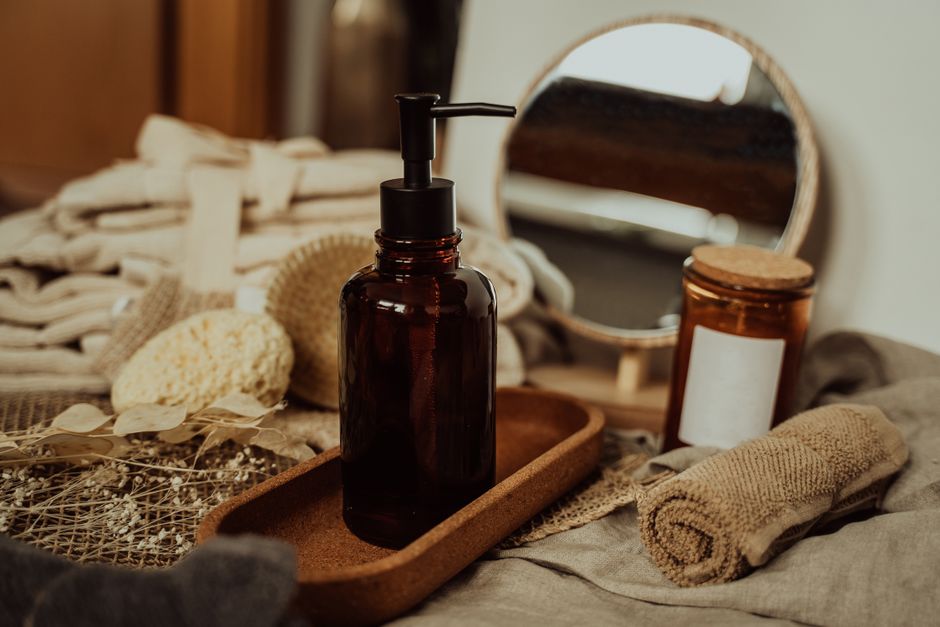
Simple swaps that add up
If you want a starting list of environmentally friendly items to swap in without overthinking it:
- Bottled body wash → a bar soap that lasts months, not weeks — try the 2 XL Soap Bar Bundle to find a scent you like without committing to a full stash.
- Plastic shampoo/conditioner bottles → solid bars, like the Shampoo and Conditioner Bar Duo.
- Aerosol or plastic-tube deodorant → an aluminum-free stick like our Fresh Woody deodorant or Citrus Spice deodorant.
- Toothpaste tubes → toothpaste tablets, which skip the plastic tube entirely.
- A single-use mindset in the shower → a linen soap saver bag, which sounds minor but genuinely extends how long a bar lasts.
None of these require you to reorganize your identity around sustainability. They're just slightly better versions of things you were buying anyway.
FAQ: Green Lifestyles and Sustainable Living
What are eco-friendly products, exactly?
Eco-friendly products are items made and packaged in ways that reduce environmental harm compared to typical alternatives — usually through natural or mineral-derived ingredients, recyclable or plastic-free packaging, and formulations designed to last longer per purchase. There's no single official standard, so it's worth checking what a brand actually does, not just what it claims.
How do I find eco-friendly products without falling for greenwashing?
Check the packaging material itself — genuinely recyclable kraft paper behaves differently than glossy coated cardboard that just looks eco. Look for brands that explain their sourcing and formulation choices specifically, rather than using vague terms like "natural" with no detail behind them.
Is sustainable living expensive?
It doesn't have to be. Long-lasting, concentrated products often cost less per use than cheaper alternatives you replace constantly, and habits like repairing, reusing, and buying only what you'll actually use save money by default.
Why is recycling important if my city's recycling program isn't perfect?
Even an imperfect system diverts real material away from landfill and reduces how much virgin resource extraction is needed. It's not about achieving a perfect loop — it's about reducing the total volume of new material the world has to produce from scratch.
What's the difference between "green" and "sustainable"?
In everyday use, they mean nearly the same thing — reduced environmental impact through daily choices. "Sustainable" leans slightly more toward long-term viability (can this be kept up indefinitely?), while "green" is often used more loosely to describe eco-conscious choices generally.
What's one small change that has an outsized impact?
Swapping bottled bathroom products — shampoo, conditioner, body wash — for solid, long-lasting bars is one of the highest-impact, lowest-effort changes available, since bathroom plastic waste adds up fast and the swap barely changes your routine.
Can a business actually be sustainable, or is that just marketing?
It can be real, but it shows up in specifics: sourcing choices, packaging materials, and how long products are designed to last — not just language on a label. Sustainable business practices are verifiable through what a company actually does, from where it buys raw materials to what its packaging is made of.
0 comments